Why does it make sense to save water?
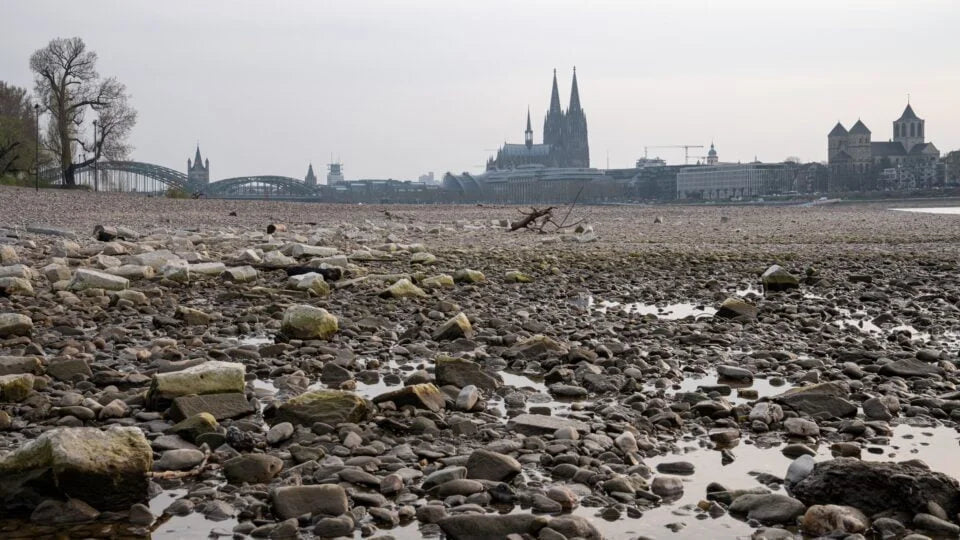
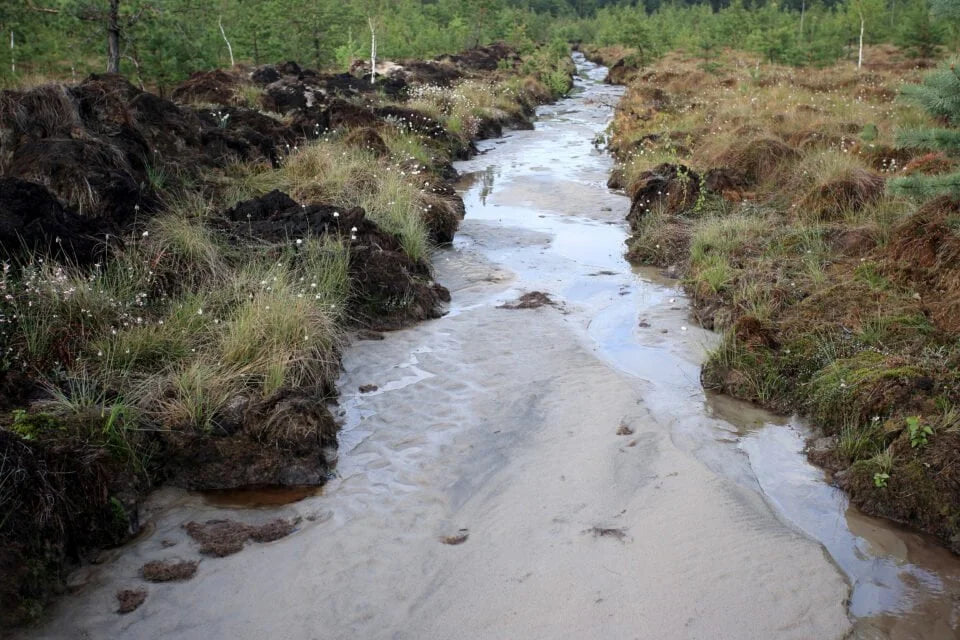
The UK is a water-rich country, and freshwater supplies are in good condition. Data from 2014 show that only 5.53 percent of the available freshwater (groundwater and surface water) is actually pumped. Therefore, the UK is not (yet) suffering from a concrete water shortage. However, what these figures do not show is that in some areas—such as around large cities—the groundwater level is sinking faster, with negative consequences. For example, the sinking of groundwater can lead to the drying out of wetlands and to settlement cracks in buildings.
In addition to the negative ecological impacts that excessive water consumption can cause, saving water is ultimately worthwhile for very mundane reasons. The most obvious is the relief on the wallet. And who isn’t happy with a lower water bill?
So, saving water pays off in the truest sense of the word. From both a financial and ecological point of view, it makes sense to save not only water but especially hot water. On average, every fourth litre of water consumed is hot water, which requires energy to heat. In total, 14 percent of a household’s energy consumption is used to heat water. Therefore, by reducing your (hot) water consumption, you not only save on heating costs but also reduce CO2 emissions.
The development of water consumption from 1980 to today
In the UK, water consumption has fallen steadily and significantly over the last 20 years, after initially rising to a peak of 266 m³ per capita per year in the twenty years from 1980 to 2000. In the meantime, this value has more than halved. Thus, the total annual consumption per person was 129 m³ in 2015. The average water consumption per day per person is 149 litres. With this balance, Great Britain is in the middle of the pack compared to other industrial nations. In Belgium, water consumption is only 120 litres; in Germany, 122 litres; in France, 148 litres; in Norway, 260 litres; and in the USA, 295 litres.
What is the composition of daily water consumption?
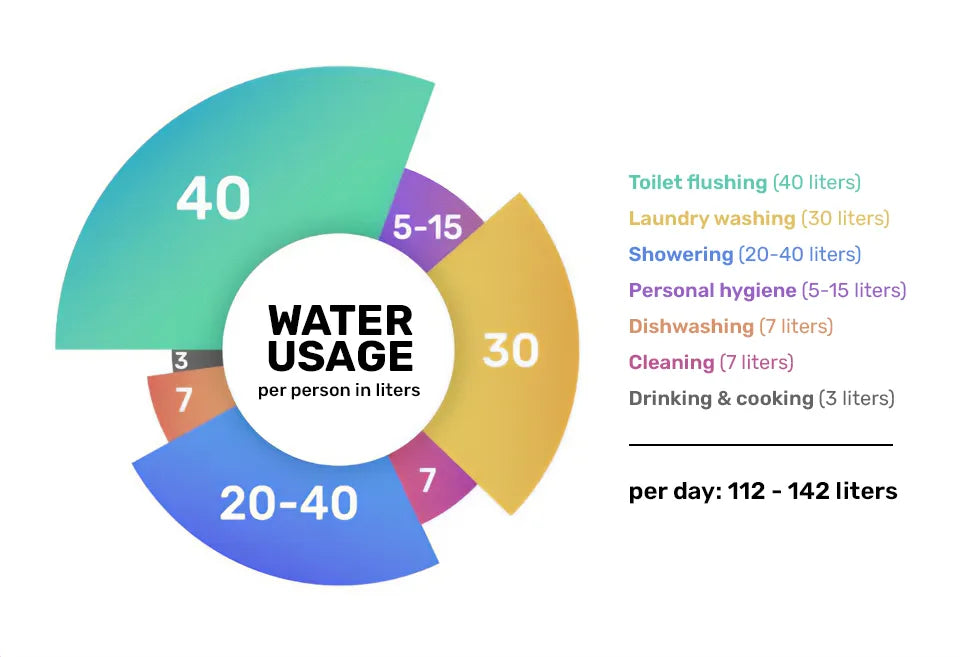
Water consumption in litres per capita per day in the UK averages 149 litres. According to water management estimates, this consumption is made up of the following factors (all figures are rounded):
- 1.5 l dishwasher
- 3 l car and garden
- 6 l dishwashing (by hand)
- 10.5 l hot water in the bathroom
- 13.5 l washing machine
- 33 l cold water use
- 33 l toilet flushing
- 49.5 l for bathing and showering
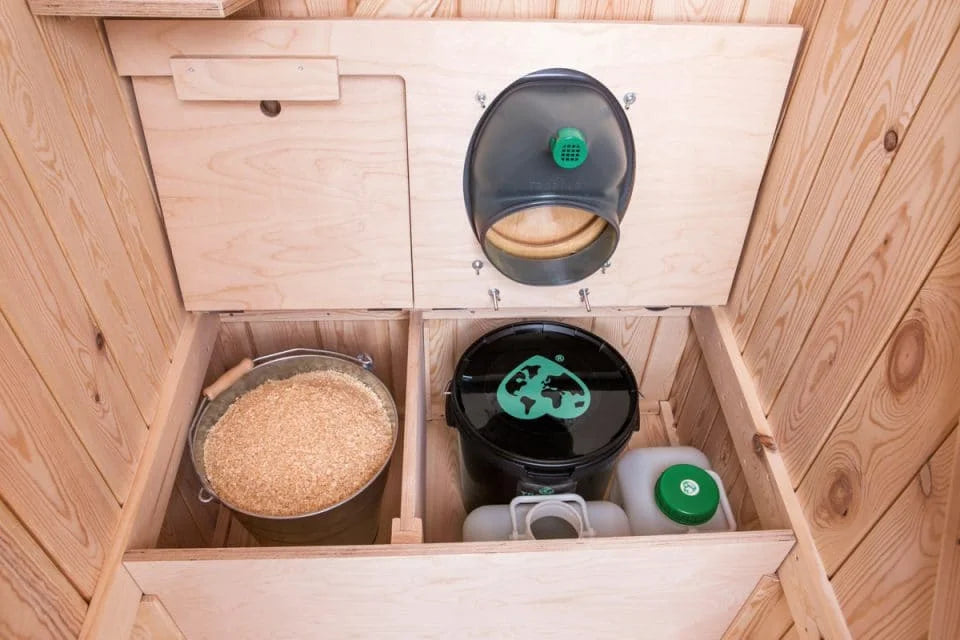
As this diagram illustrates, 33 litres of water per day are used for toilet flushing alone. This factor is eliminatedcompletelywhen using TROBOLOurine-divertingtoilets, which we will discuss in more detail below. You can also find a detailed description of the savings potential of TROBOLO in our section on sustainability.
Where can water be saved in the household and garden?
Whether out of love for nature or to lighten the load on your wallet – with these practical tricks you can reduce your water consumption quickly and reliably.
Examine your own use of water
As is often the case, the small but subtle difference lies in changing your own behaviour.
- Showering instead of bathing: While an average of 15 litres are used when showering, the water consumption when bathing amounts to roughly 140 litres – almost ten times as much!
- Turn off the tap: The Corona pandemic has taught even the last of us that thorough hand hygiene requires 20-30 seconds of soaping time. If you turn off the tap during this time, you save a considerable amount of water every day.
- Clean fruit and vegetables in a bowl: Instead of under a running tap. Here, too, you can save litres of water. Afterwards, the water can even be used to water plants.
- Use a toothbrush cup: Similar to using a bowl when cleaning fruit and vegetables, the toothbrush cup allows you to accurately measure the amount of water you need and prevents the (subconscious) bad habit of leaving the tap running unnecessarily.
- Filling the washing machine correctly: unless you have a modern washing machine with an automatic volume control (which regulates the amount of water used depending on how full it is), it is important to always load the washing machine fully to ensure efficient water use.
Furthermore, water consumption at home can be significantly reduced if we pay attention to the proper functionality of appliances on the one hand and optimize them with water-saving features on the other.
- Check seals and insulation: Due to dripping taps, about 2,000 litres are wasted per year per household. Defective seals are not only a cost factor but also have a considerable impact on a household’s water balance.
- Flow limiters and economy shower heads: To save water effectively in the bathroom, these cost-effective upgrades are essential. Once installed, they can save up to 50 percent on water and 25 percent on energy costs for hot water.
- Regulation of the toilet’s water consumption: Modern cisterns have an integrated stop button that reduces water consumption by about 50 percent. Older cisterns can be equipped with such a button for about 10 euros.Finally, the most uncompromising variant is to use one of our TROBOLO urine-diverting toilets. Thanks to the waterless mode of operation, 100 percent of the water is saved compared to conventional toilets!
- Efficient appliances: When buying a new washing machine or dishwasher, their water and energy consumption should be decisive purchase criteria. These appliances contribute to 20 percent of total water consumption. Additionally, the water used for rinsing and washing is often heated, so water-saving appliances are frequently also energy-saving. If your current appliance consumes a lot of water and electricity, it is usually worth purchasing a new one before it breaks down.
Reduce water consumption in the garden
A few simple tricks can also save a lot of water in the garden.
- Mowing the lawn: A lawn that is always trimmed short dries out faster and therefore needs more water. If, on the other hand, you leave the grass to itself from time to time, not only the water balance will be happy, but also insects which benefit from letting the grass grow naturally.
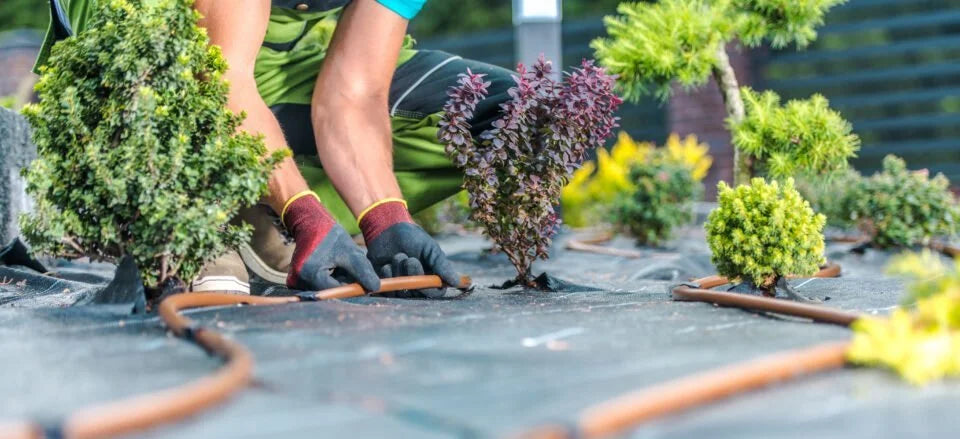
- Watering: A lawn sprinkler should be avoided if possible. A water-saving option is to use a drip hose. You can also water your lawn according to its individual needs, as shaded areas dry out less quickly than the middle of the lawn. This way, many litres of water can be saved.
- Watering times: If possible, you should water plants and flowers in the morning or evening hours, as they use less water at this time than in the sun-intensive midday hours.
Virtual water - problems of a globalised world
Anyone who seriously considers the topic of saving water will sooner or later come across the term “virtual water”. Virtual water indicates the amount of water actually needed for the production of goods and products. A distinction is made between three types of virtual water (green, blue, grey). Green virtual water refers to water that is obtained from rainfall and soil moisture. Blue virtual water stands for the amount of water used for artificial watering. Finally, grey virtual water is affected during use (e.g. by fertilisers) and can only be reused to a limited extent.
To illustrate this classification, the virtual water balance of one kilogram of beef is presented as an example.
Beef is one of the products with the highest consumption of virtual water. On average, 15,415 litres of virtual water are needed worldwide to produce one kilogram of beef. However, 14,414 litres (93.5%) of this is green water, i.e. water that falls as rain on the forage areas. The remaining 6.5% is made up of blue and grey water. Beef production thus requires huge amounts of water (even if most of it comes from rainfall). Compared to this, relatively little water is required for a kilogram of pork or chicken (4,800 and 3,900 litres respectively). Other products require relatively little water, such as almonds, but artificial watering is used to increase yields. Almonds, for example, have a rather proud virtual water balance of 13,000 litres per kilogram.
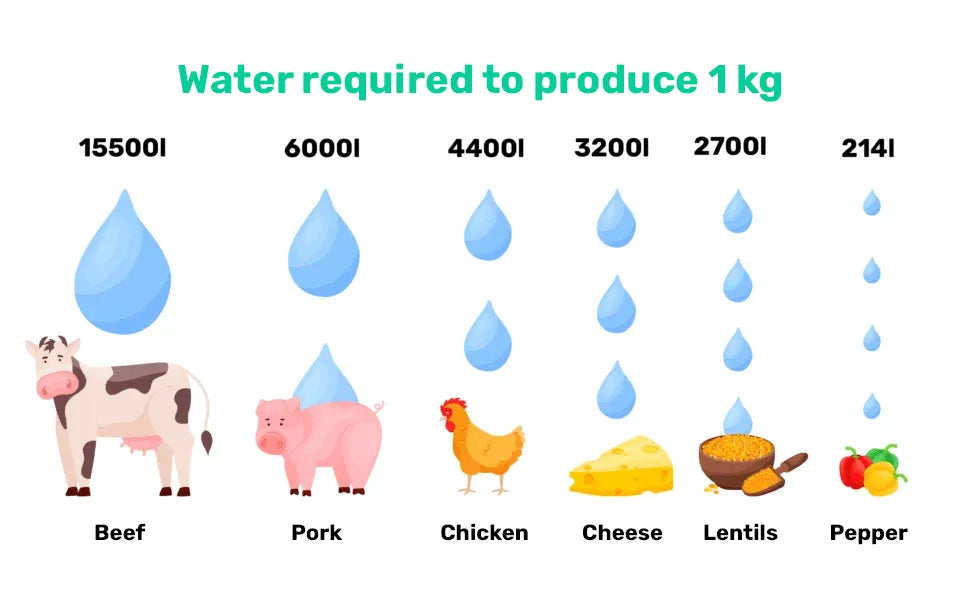
If one includes the virtual water footprint of products consumed in the UK in the calculation of average water consumption, it increases from the 149 litres mentioned to a full 4645 litres of water. This is particularly problematic because the UK imports much more virtual water through imported products than it exports. In short, the UK’s water footprint is not exactly ideal despite comparatively low water consumption (excluding virtual water).
So if you are serious about saving water, you should not only try to reduce water consumption in your own household, but also pay attention to the virtual water footprint of products when shopping in future and rethink your consumption behaviour if necessary.
Further information on the topic can be found at:
https://en.wikipedia.org/wiki/Virtual_water
https://www.waterfootprint.org/resources/Report16Vol1.pdf
Composting toilets from TROBOLO - far more than just water-saving
All of our TROBOLO urine-diverting toilets function completely waterless. The savings potential is therefore enormous. According to the water management estimates mentioned earlier, the daily water consumption per capita in the UK is 149 litres. The amount of water needed for toilet flushing amounts to 33 litres per day, accounting for 22 per cent of total water consumption. With TROBOLO waterless urine-diverting toilets, you thus reduce your water consumption by more than a fifth of the total amount and not only improve your water balance, but also reduce your running costs by a significant amount.
Finally, TROBOLO urine-diverting toilets offer a different approach to handling human waste. They operate without flushing water, so no blackwater is generated that would otherwise need to be transported and treated as conventional wastewater. Thanks to the TROBOLO separation system, the solid and liquid components can be collected separately and managed according to the intended use. The collected solids can also be composted, provided this is permitted and carried out in accordance with applicable requirements. Once the composting process has been completed and the resulting material is suitable for its intended use, the nutrients it contains can be returned to the soil.
You can find more information about the use and management of our urine-diverting toilets in our sections on sustainability and composting.
The bottom line on saving water with composting toilets
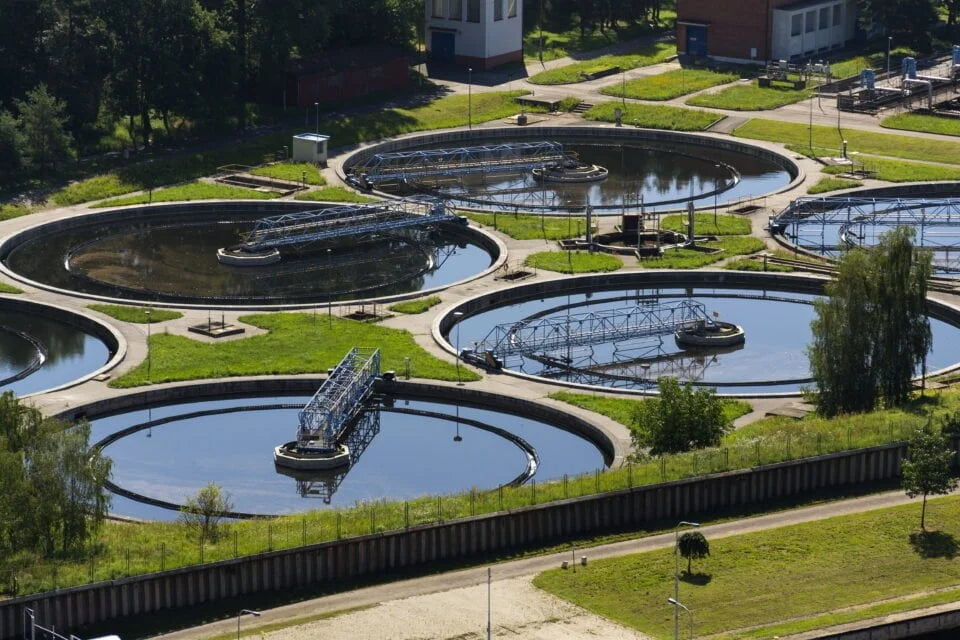
According to official figures, water scarcity is not yet a problem in Germany. Nevertheless, the first effects of drought are already visible. We can do a lot to conserve this precious resource through our lifestyle. Water cannot be produced artificially; it is a limited resource that we must not only conserve but also treat and return to the cycle. Water treatment plants are facing ever-increasing challenges in treating our wastewater, so we should produce as little wastewater as possible.
This is where TROBOLO composting toilets come in. Not only do they save a large proportion of our daily water consumption, but they also allow us to compost toilet waste and return it to nature once the decomposition process is complete. This not only saves water and prevents the production of wastewater but also returns valuable nutrients to the natural cycle.
And now: do your bit and conserve one of the world’s most valuable resources by choosing a composting toilet. Have fun doing it!
Always stay up to date
Sign up for our newsletter here to never miss out on any news or free promotions.